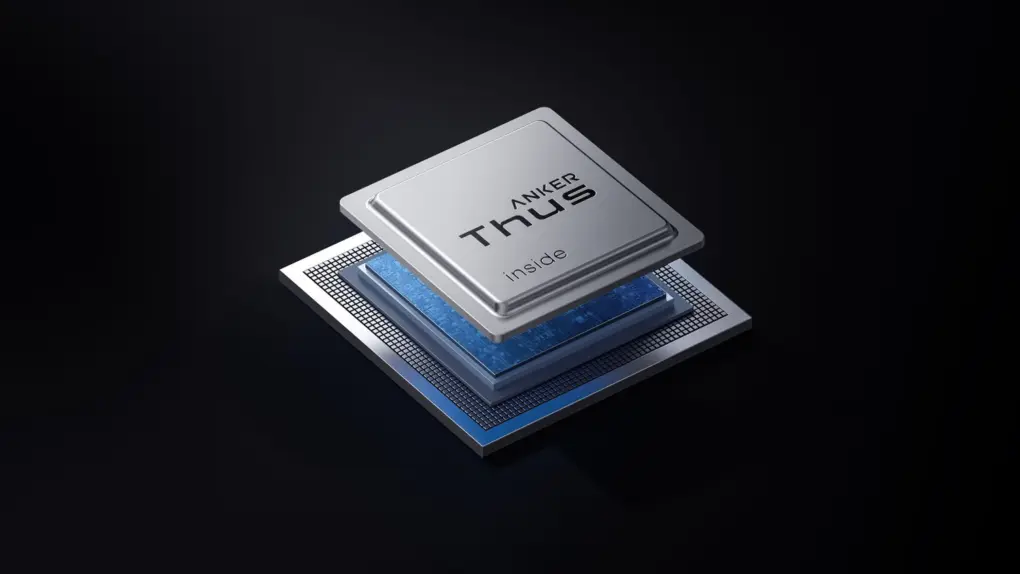
Anker just quietly did something no accessory maker has attempted before: It built its own AI chip from the ground up, specifically designed to run powerful neural networks inside tiny, battery-powered devices. It announced the chip, called “Thus,” on Wednesday and plans to release it on Anker Day (May 21) inside its earbuds.
If the chip delivers on its promises, it could fundamentally change what we expect from earbuds — possibly including Apple AirPods — and other devices.
“Every AI chip built to date stores the model on one side and performs the computation on the other,” said Steven Yang, Anker’s founder and CEO. “To ‘think,’ the device must shuttle these parameters back and forth many times per second for every single query. Thus brings the computing power to where the model already resides. The model never has to move again.”
Anker Thus chip for earbuds: What is it?
The traditional design of AI chips, with all that data moving back and forth, might fly in data centers. But in something as tiny as an earbud, it’s a crisis. More than 90% of the power a chip consumes can be spent moving data around, leaving very little for computation, Anker said in German-language press release about its innovative new chip.
Thus takes a fundamentally different approach. Anker calls it the first Compute-in-Memory (CIM) AI audio chip with neural networks, saying it’s inspired by how the human brain works in that the storage and processing of information takes place in one location instead of keeping them separate.
Rather than shuttling parameters between memory and processor, Thus embeds the computation directly inside NOR Flash memory cells. That means the model parameters never have to move. Remarkably, NOR Flash-based compute-in-memory requires only about a sixth of the physical space of SRAM-based alternatives. That makes it well-suited for the smallest devices.
The chip is manufactured in Germany as part of Anker’s global production network.
What it means for your ears
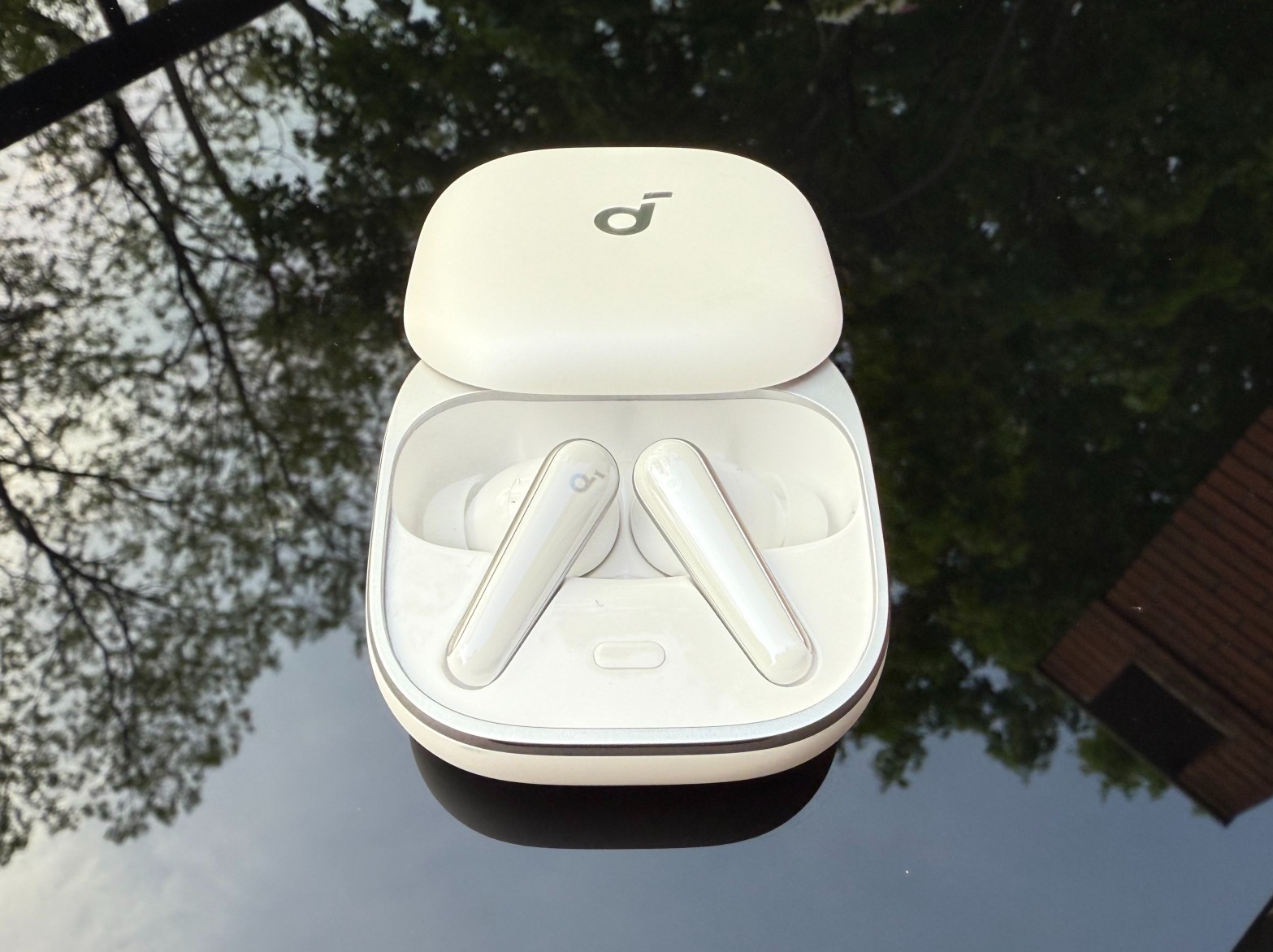
Photo: David Snow/Cult of Mac
Anker claims the Thus chip delivers 150 times more AI computing power for noise cancellation than previous Soundcore models. The first feature to be previewed is called Clear Calls. Rather than relying on signal processing algorithms or small neural networks that break down in loud and complex environments, Clear Calls replaces those approaches with a large neural network running entirely on the device, anchored by eight MEMS microphones and two bone conduction sensors that isolate the speaker’s voice from its physical vibration.
The first Thus-powered earbuds should come out on Anker Day, May 21. Leaked details point to a Soundcore Liberty 5 Pro line, with the higher-end version reportedly adding a charging case that doubles as a standalone voice recorder with eight microphones. The earbuds might also include voiceprint recognition that allows them to identify and authenticate the owner by their voice. Additional features will probably include Signature Sound and Voice Control.
Why Apple users should pay attention
Apple’s AirPods Pro are the gold standard against which all other earbuds are measured. Apple’s H2 chip currently powers the noise cancellation and Transparency mode. But Thus represents a genuine architectural challenge. Apple has done something similar in reverse by integrating memory into its M-series processors — but it has never applied that philosophy to its audio chips at this scale.
The introduction of a dedicated AI chip and a smart charging case with a display represents a big move for Anker’s Soundcore brand. It would shift it beyond core audio performance into integrated smart features and personalized sound. If Anker can demonstrably outperform AirPods Pro on call clarity — a real-world use case Apple users care deeply about — that changes the conversation. At rumored prices of $169.99 and $229.99 for the Pro and Pro Max respectively, these would also significantly undercut AirPods Pro pricing.
A platform, not just a product
What makes Thus genuinely interesting to watch is Anker’s stated ambition for the processor. Over the next few years, expect to see Thus chips appearing across the full Anker ecosystem, from Soundcore audio gear to mobile accessories and IoT devices. Anker frames this as a long-term platform, not a one-off product launch.
The name Thus is derived from the phrase “Thus have I heard,” a Buddhist reference to the direct transmission of knowledge, according to Anker. It’s a philosophical nod that signals Anker sees this as something more than a spec-sheet upgrade. Whether Thus can truly deliver that promise — or becomes another ambitious claim that real-world testing deflates — remains to be seen when the earbuds ship next month.

David Snow, an expert on Apple hardware and software, writes on a variety of technological and cultural topics for Cult of Mac. They include Apple news, technology buying guides, and features about computer setups and Apple TV shows and movies.
With 30 years of experience covering technology and other subjects, he has written and edited for numerous print and online publications, including CMP Media, TechTV.com, CNET, Wired News, Red Herring magazine, Law.com, The National Law Journal and Law Technology News magazine. Among other roles, he served as executive editor of the Law.com network of websites and editorial director, technology, for ALM Media.
Snow graduated with a B.A. from Syracuse University with majors in magazine journalism and psychology. While there, he worked as a reporter for The Daily Orange newspaper and associate editor of Equal Time magazine.
Founder of the blog At the Waterline, he can be reached on X (formerly Twitter) via @atthewaterline and on Mastodon via @dsnow.